Royal College of Nursing Congress 2025 Blog
Published 25/07/2025
By Ellen Edwards, Digital Transformation Research and Engagement Lead
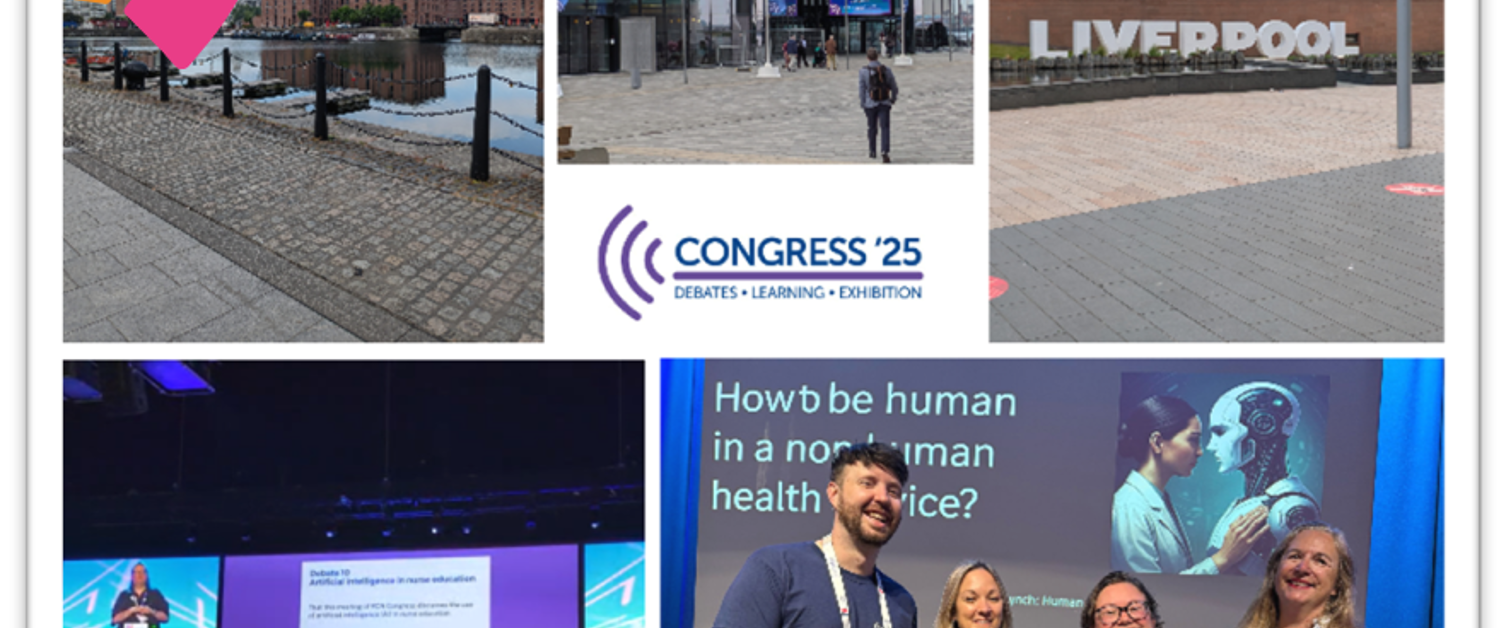
The 13 – 15 May 2025 marked the annual Royal College of Nursing (RCN) Congress held in Liverpool. The RCN Congress is the most significant event in the nursing calendar, providing an opportunity for nurses to contribute to the college's work for the upcoming year while also earning Continuing Professional Development (CPD) credits.
In January 2025, I was appointed to the RCN Digital Nursing Forum Steering Committee, a group within the college that informs and supports the RCN's initiatives in Digital Nursing. As a member of this steering committee and with the support of HEIW, I had the privilege of attending Congress for two days this year as a voting member. Voting members represent up to 1000 RCN members and are responsible for voting on resolutions included in the agenda. These resolutions serve as calls to action, and the RCN is required to report back to Congress the following year on the progress made regarding these resolutions.
The 2025 agenda consisted of a mixture of themes, from Neurodiversity to Nursing’s role in combatting human trafficking and accountability for patients in ambulances to financial hardship and whether nursing leadership are experiencing ‘skill decay’. Alongside the debates there were keynote speakers, imparting wisdom around nurse activism, highlighting health inequalities and sharing stories from nurses working in warzones. Digital and Data however was a constant theme running through congress with many speaking about how the lack of data on certain matters is making it difficult to truly understand the impact. One of the main areas of digital discussion was that of AI, especially its impact on nursing education. It was great to see AI on the agenda as in 2024 I presented a matter for discussion to Congress on the evolution of AI in health care.
There were 3 main references to AI. The first was an education session on how to stay human in a non-human health service, which focused on the importance of the human skills that a nurse brings to technology advancements. It also presented a strong message on why digital nurse leadership is so important. There was a debate in the main hall on AI in education, which sparked an interesting discussion on the benefits of personalised learning opportunities. During this session members raised concerns about students utilising AI inappropriately to write assignments. The debate was followed by a fringe event, organised by the Education Forum. NHS Wales was represented by DHCW Clinical Informatician, Abi Swindail, who presented the session and led a panel discussion on AI in education.
With Keynote speakers and debates on health inequality, there was a clear theme on the gaps in data availability and the impact this is having on assessing the full extent of the inequality. The question was posed whether this is due to gaps in the data collected or a result of poor technical infrastructure and capability of capturing the information. It is widely known that digital exclusion exacerbates health inequalities by reducing patients and service users’ access to healthcare but is it also the cause for lack of data, preventing health and social care organisations fully understanding the problem? As organisations become increasing driven by data are we burying our heads in the sand? If the data does not exist, is it really a problem?
As a Digital Nursing Forum member and as someone working in digital skills, I had many nurses approach me asking about developing digital skills and how they can utilise social media to develop their career. This made me think about the digital capability framework and digital professionalism. Many of the domains within the Digital Capability Framework link to leadership and professionalism as well as our ability to work with others in a digital environment. These are core skills that are beginning to be recognised within the profession. Incorporating these themes into ongoing education is going to be important as we move forward.
Overall, the mood towards digital transformation, at this years’ congress was much more positive than the year before. The increasing pace of change in this area further highlights the importance of digital leadership, and the key role that Health Education and Improvement Wales can play in shaping the future for the healthcare workforce in Wales.
For more information regarding our Digital Capability Framework, please see;
https://heiw.nhs.wales/our-work/digital-capability-framework/