Why workforce readiness will determine the success of digital transformation in NHS Wales
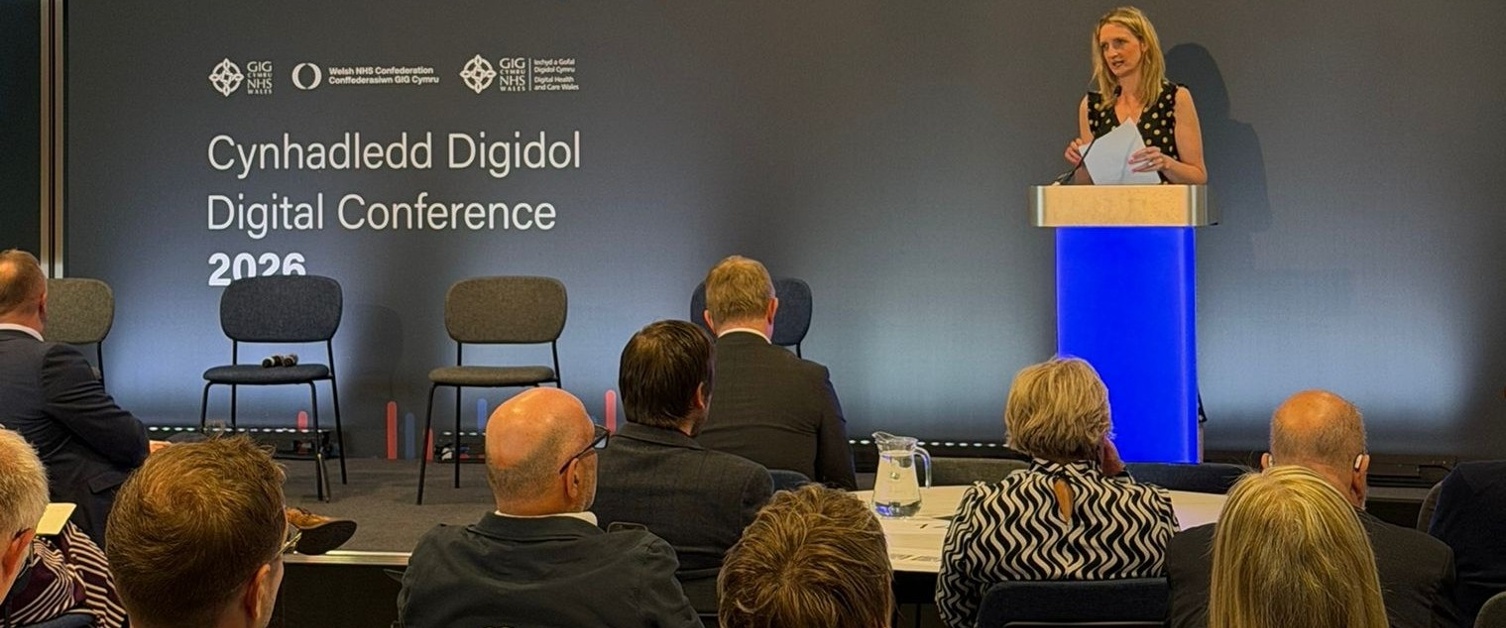
By Sian Richards, Executive Director of Digital, Data and Engagement, HEIW - published 21 May 2026
Technology alone does not transform services. People do.
Throughout my career in NHS Wales, whether working in frontline operational services, service redesign or digital leadership roles, that’s probably the most important lesson I have learned.
Digital transformation succeeds when the workforce is ready to change, not simply when the technology is ready to deploy.
We can invest in systems, infrastructure and innovation, but unless staff feel confident, supported and able to work differently, transformation will always be limited. I think that’s one of the biggest lessons healthcare organisations continue to learn, not just in Wales, but internationally.
And that’s why workforce readiness matters so much.
Digital change is everybody’s business
Digital capability is becoming increasingly important across every part of NHS Wales.
Whether someone works in direct patient care, operational delivery, workforce planning, education, leadership or administration, digital tools and technologies are increasingly part of everyday working life.
At the same time, the pace of change continues to accelerate rapidly. Artificial intelligence, automation and data-driven technologies are beginning to reshape how services operate and how decisions are made across healthcare systems.
But introducing new technology does not automatically improve services.
We have all seen examples where systems have been introduced with huge ambition, but without enough workforce engagement, capability building or support around behaviours and adoption. In those situations, transformation can quickly become frustrating for staff rather than enabling.
In reality, some of the biggest barriers to change are often not technical at all. They are organisational, behavioural and cultural.
Confidence, adoption, leadership and readiness for change increasingly determine whether digital investment genuinely translates into better care, improved staff experience and more sustainable services.
Having worked in operational environments earlier in my career, I understand how overwhelming change can sometimes feel for staff, particularly when services are already under pressure. Most NHS staff are incredibly adaptable and resilient, but adaptability still requires time, support and confidence.
For me, this is why digital capability can no longer sit at the edges of transformation discussions as simply an IT issue. It’s now fundamentally a workforce and organisational development issue for NHS Wales.
In an increasingly pressured healthcare environment, helping staff work confidently and effectively with digital tools is also becoming increasingly important for workforce sustainability, productivity and service resilience.
Building a digitally ready workforce
This thinking has shaped the development of the Digital Capability Framework (DCF) at Health Education and Improvement Wales (HEIW), launched nationally in 2024 as part of our wider Building a Digitally Ready Workforce programme.
The framework was designed to help individuals and organisations better understand digital capability across the workforce, not simply in terms of technical skills, but also behaviours, confidence and leadership.
Importantly, digital capability is much broader than many people first assume. It includes communication, collaboration, leadership, innovation, data literacy, wellbeing, professionalism and the ability to adapt confidently to new ways of working.
Since launch, more than 2,500 staff across NHS Wales have completed the framework, giving us an important national baseline of digital capability.
But perhaps one of the most valuable things this work has shown us is that digital capability is not one-size-fits-all.
A consultant psychiatrist and a ward clerk both need digital capability, but not the same capability. Different professions, services and care settings require different levels of confidence, behaviours, knowledge and support.
That may sound obvious, but it represents an important shift in thinking.
Too often, digital capability programmes have focused on generic skills development rather than recognising the realities of different operational environments and workforce roles. Staff do not need another framework that feels disconnected from operational reality. What they need is something practical, relevant and meaningful to the work they do every day.
I believe that if we genuinely want transformation to succeed, we have to stop thinking about digital capability as a compliance exercise and start thinking about it as part of modern workforce development.
Moving from measurement to meaningful workforce transformation
The Digital Capability Framework originally began as a self-assessment and benchmarking tool. But measurement alone is not enough.
The real opportunity now is to move from measuring capability to building capability across NHS Wales in a way that’s practical, role specific and embedded into wider workforce transformation.
This next phase of the programme is something I feel particularly passionate about because it moves us beyond assessment for assessment’s sake and toward something much more meaningful and sustainable.
One of the most important developments within this work is the introduction of a graduated capability model which recognises that digital capability requirements differ across professions, services and levels of responsibility.
In simple terms:
the right capability, for the right role, at the right level.
This is important because it allows organisations to move away from generic capability expectations and toward a more realistic and supportive approach to workforce development.
Alongside this, the programme is evolving around several connected areas including learning and development, behavioural and cultural change, user experience, engagement and workforce insight.
Ultimately, we’re trying to build something that helps organisations create the conditions for confident adoption and sustainable change, rather than simply another framework staff feel obliged to complete.
Preparing for an AI-enabled future
The growing conversation around artificial intelligence in healthcare only reinforces why this work matters.
AI has enormous potential to support healthcare delivery, workforce productivity and service transformation. But successful adoption will depend heavily on workforce confidence, understanding and readiness.
This is not simply about technical knowledge. It’s about helping staff feel able to engage with emerging technologies critically, safely and confidently. It’s about supporting leaders to understand the workforce implications of change and helping organisations create cultures where curiosity, learning and adaptability are encouraged.
I strongly believe workforce readiness will increasingly determine whether digital and AI investment genuinely improves care and staff experience in the years ahead.
A whole system challenge
One of the most important lessons I have learned through digital transformation work is that strong digital teams alone are not enough.
Of course, we need highly skilled digital professionals. Their expertise is critical to designing and supporting modern healthcare systems.
But their work only achieves real impact if the wider workforce is ready to receive it, adopt it and use it confidently in practice.
This is ultimately a whole-system challenge.
It requires collaboration across NHS organisations, professions and services across Wales, alongside meaningful engagement with staff and leaders at every level. It also challenges us to think differently about workforce planning, professional development and organisational culture.
At HEIW, we’re continuing to develop this work collaboratively with health boards, trusts, universities and national partners across Wales. If this is going to work long term, organisations need to feel genuine ownership of it.
I am also incredibly pleased that Vicki Hayman-Teear our Head of Digital Skills and Capability, is now leading the next phase of this programme nationally. Vicki brings significant operational, digital transformation and workforce redesign experience, alongside a real passion for practical workforce change. With a background in nursing and hands-on experience leading service and digital transformation within NHS Wales, she brings both credibility and energy to this work and will play an important role in helping organisations embed digital capability meaningfully within services and teams. She is particularly passionate about ensuring this work remains practical, people focused and embedded within day-to-day workforce development as the programme continues to evolve.
For me, this work has never really been about technology alone.
It’s about supporting people.
It’s about helping staff feel confident and capable in a rapidly changing environment.
And ultimately, it’s about creating the conditions where digital transformation can genuinely improve care for the people of Wales.